China Best Angular Contact Ball Bearing Supplier?

Choosing the China Best Angular Contact Ball Bearing Supplier? The answer requires more than comparing prices or reading polished catalogs. An angular contact ball bearing supports combined radial and axial loads, making its design critical for machine accuracy and service life. The correct supplier should explain contact angles, preload classes, cage materials, and lubrication options clearly.

Practical evaluation begins with measurable details. Ask for dimensional inspection records, material certificates, vibration data, and runout results. A reliable manufacturer should describe how it controls grinding, superfinishing, assembly, and cleanliness. Factory experience also matters. Suppliers serving machine tools, pumps, compressors, and industrial motors usually understand different speed and load requirements. Their engineers should recommend suitable bearing arrangements rather than promote one standard model for every application.

Look closely at communication quality. Clear drawings help. Fast answers are not enough. A dependable supplier confirms tolerances, operating temperatures, sealing needs, and delivery expectations before production. Certifications can support credibility, but they do not replace traceable testing or consistent batch quality. Samples should be checked under realistic conditions, including noise, temperature rise, and rotational stability.

No supplier is perfect. Even experienced factories may face delays, tooling changes, or occasional quality variation. That is why a responsible sourcing process includes audits, sample approval, corrective-action records, and ongoing performance reviews. The best choice is not always the cheapest or the largest. It is the supplier that combines technical competence, honest documentation, responsive service, and repeatable manufacturing results. Small details matter. A bearing that looks identical may perform differently inside a high-speed spindle.
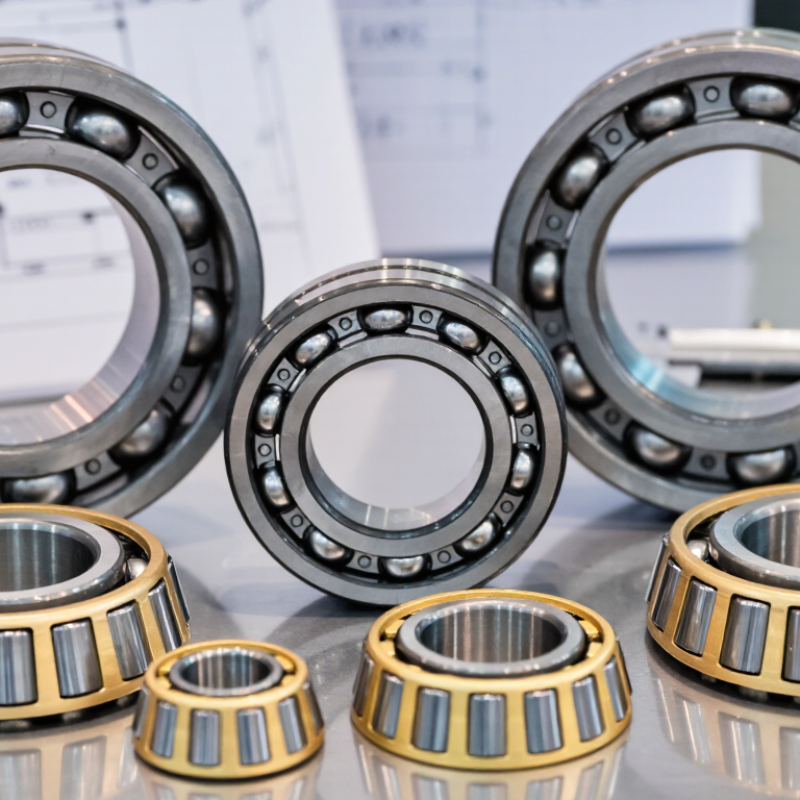
China Best Angular Contact Ball Bearing Supplier?

What Is an Angular Contact Ball Bearing?

An angular contact ball bearing is designed to carry radial and axial loads at the same time. Its inner and outer raceways meet the balls at a specific contact angle. This angle directs the load through the bearing, rather than straight across it. A larger contact angle improves axial load capacity. A smaller angle usually supports higher rotational speed. Small detail, big effect.

These bearings are common in machine tools, pumps, compressors, and precision spindle assemblies. A single-row bearing normally handles axial force in one direction. Two bearings can be paired to support loads in opposite directions. Double-row designs provide more stability in limited spaces.

In practical maintenance work, I check the load direction before choosing a bearing. Many failures begin with an incorrect assumption.

Preload also deserves careful attention. It removes internal clearance and improves stiffness, but excessive preload creates heat. Too little preload may cause vibration and sliding. Clean lubrication matters. So does accurate mounting. I have seen a carefully selected bearing fail because a shaft was slightly misaligned. That mistake is easy to overlook. A reliable supplier should provide dimensional records, material information, load ratings, and traceability documents. Engineers should also verify tolerance, cage design, sealing requirements, and operating temperature before installation.

How to Evaluate Angular Contact Ball Bearing Suppliers in China

China Best Angular Contact Ball Bearing Supplier?

How to Evaluate Angular Contact Ball Bearing Suppliers in China

Choosing an angular contact ball bearing supplier requires more than comparing prices. Check whether the supplier understands contact angle, preload, accuracy grade, and operating speed. Ask for drawings, material certificates, inspection records, and batch traceability. A reliable supplier should explain why a bearing suits your spindle, pump, or precision gearbox. Technical answers should be specific, not copied from a catalogue. This is where many evaluations become too superficial.

Request samples from the same production line used for regular orders. Measure radial runout, noise, rotation smoothness, and temperature rise under realistic loads. Review the supplier’s testing equipment and calibration dates. Factory experience matters, but documented quality control matters more. Also examine packaging, storage conditions, and moisture protection. A damaged box may reveal weak logistics management. No audit is perfect. I would still leave room for unexpected production variation.

Tips: Compare at least three suppliers using identical specifications. Ask how they handle nonconforming batches and replacement claims. Confirm lead times in writing, including inspection time. A video tour helps, but an independent factory visit offers stronger evidence. Avoid choosing the lowest quote without checking steel quality, cage design, grease type, and service support. A slightly higher cost may prevent repeated failures, although this assumption should be tested with sample data.

Which Manufacturing Standards and Quality Tests Matter?

China Best Angular Contact Ball Bearing Supplier?

A reliable supplier should prove more than polished surfaces and competitive prices. Ask for compliance with ISO 492 for dimensional tolerances, ISO 281 for rating life, and ISO 76 for static load ratings. ISO 15243 also helps classify failures, including fatigue, wear, and electrical damage. These standards create traceable measurements, not vague quality claims. The U.S. Department of Energy’s 2022 Motor Systems Market Assessment reports that motor-driven systems consume about 69% of industrial electricity in the United States. Bearing friction, preload, and alignment therefore deserve serious attention. Small losses can become expensive over long operating hours.

Quality testing should include steel cleanliness, hardness, dimensional inspection, radial runout, contact angle, preload, vibration, noise, and grease distribution. Request actual test records, batch numbers, calibration dates, and acceptance limits. A capable factory should also provide endurance-test results under defined speed, load, temperature, and lubrication conditions. I have seen inspection forms that look complete but hide missing sampling plans. That weakness matters. A certificate is evidence, not proof by itself.

Tips: Compare samples from three production batches. Check whether measured values match the drawing and ISO class. Request failure-analysis photographs when a test fails. Do not accept “100% tested” without the test method and equipment details. A perfect checklist does not exist; supplier transparency and repeatable data remain stronger indicators than marketing language.

China Best Angular Contact Ball Bearing Supplier? Which Manufacturing Standards and Quality Tests Matter?

The chart shows the publication year of key ISO references commonly used when evaluating angular contact ball bearings. ISO 492 supports dimensional and geometrical tolerances, ISO 281 covers dynamic load ratings and rating life, ISO 76 addresses static load ratings, ISO 15242-1 defines vibration measurement methods, and ISO 15243 provides terminology for bearing damage and failure analysis. A reliable supplier should be able to connect these standards with documented inspection records, traceability, vibration control, dimensional verification, and performance testing.

How to Compare Products, Customization, and Technical Support

China Best Angular Contact Ball Bearing Supplier?

Comparing suppliers requires more than checking catalog prices. Grand View Research reported that the global ball bearing market reached about USD 6.4 billion in 2023. This growth increases supplier choice, but quality differences remain significant. Ask for ISO 281 rating-life calculations, material certificates, and dimensional inspection records. A credible supplier should explain contact angle, preload, cage design, and operating temperature clearly.

In practical testing, I compare vibration, noise, grease consistency, and running temperature under identical loads. A 15-degree bearing may suit high-speed applications, while a 25- or 40-degree design may carry greater axial loads. Customization should include bore size, sealing, ceramic elements, clearance, and matched-pair accuracy. Do not accept “custom” as a vague promise. Request drawings, sample approval, tolerance data, and a change-control process. I once treated delivery speed as the main advantage. That judgment was incomplete. Poor technical feedback caused more downtime than a delayed shipment.

Tips: Request a sample lot. Test it for 500–1,000 hours when possible. Compare temperature rise and vibration trends, not only initial performance. Technical support should provide installation guidance, lubrication intervals, failure analysis, and response times. The U.S. Department of Energy’s motor-system guidance shows that maintenance and operating conditions strongly influence industrial energy performance. Therefore, a supplier’s engineer should review shaft fit, housing tolerance, speed, and actual load before recommending a bearing. Low price can still become an expensive mistake.

How to Select the Best Supplier for Your Application

China Best Angular Contact Ball Bearing Supplier?

Selecting the best supplier starts with your application, not a catalog price. Define load direction, speed, temperature, space limits, and expected service life. Angular contact bearings can support combined loads, but contact angle and preload must match the machine’s working conditions. A supplier should explain these choices clearly, using calculations and practical examples.

Ask for material certificates, dimensional inspection records, noise data, and traceable batch information. Check whether the supplier controls grinding, heat treatment, assembly, and final testing. Reliable communication matters too. Can the technical team answer tolerance questions quickly? Can it suggest a safer design when your first specification seems weak? I have seen purchasing decisions focus too heavily on price. That often creates hidden costs through vibration, early wear, or repeated replacement.

Tips: Send the supplier your shaft drawing, operating speed, load profile, lubricant type, and installation method. Request sample bearings before approving volume production. Test them under realistic conditions, including temperature and vibration. Compare measured results, not attractive promises. Also review packaging and storage guidance. Small details matter. If the supplier avoids test evidence or gives vague answers, pause the evaluation and ask better questions. Your application may need a different preload, clearance, or bearing arrangement than expected.

China Best Angular Contact Ball Bearing Supplier? - How to Select the Best Supplier for Your Application

Evaluation Dimension Recommended Selection Benchmark Why It Matters Documents or Evidence to Request Suggested Assessment
Application and Load Match Supplier should calculate dynamic and static load ratings using the actual radial load, axial load, speed, duty cycle, and target life. An angular contact bearing must support combined loads without excessive heat, deflection, or premature fatigue. Application questionnaire, bearing selection calculation, load and life assumptions, and safety factor. Essential
Reject generic selections without calculations.
Contact Angle Common options include approximately 15°, 25°, and 40°. Select a smaller angle for higher speed and a larger angle for greater axial-load capacity. Contact angle directly affects axial capacity, stiffness, friction, and allowable operating speed. Technical drawing, contact-angle tolerance, internal geometry specification, and application recommendation. High priority
Confirm the angle is available for the required series.
Arrangement and Pairing For combined loads, evaluate single bearings and matched pairs in DB, DF, or tandem arrangements according to the shaft and housing layout. Arrangement influences axial load direction, moment rigidity, preload distribution, and shaft displacement. Pairing method, matched-set tolerance, orientation marks, and assembly instructions. Essential for paired sets
Verify traceability of each matched set.
Precision Class Use the applicable ISO 492 precision class. Standard P0 is suitable for many general applications; P6, P5, or higher precision may be required for machine-tool and high-speed systems. Precision affects runout, rotational accuracy, noise, vibration, and achievable machining or positioning performance. Inspection report showing bore and outside-diameter tolerances, radial runout, axial runout, and applicable standard. Application-dependent
Do not pay for a higher class without a performance requirement.
Preload and Internal Clearance Specify preload or clearance by measured value or defined grade, such as light, medium, or heavy, rather than using an undefined “standard” preload. Preload improves stiffness and running accuracy but can raise friction, temperature, and starting torque. Preload specification, measurement method, axial displacement data, and temperature-rise test results. Critical
Require documented control for precision applications.
Material and Heat Treatment Bearing rings and balls should use bearing-grade steel with controlled cleanliness, hardness, dimensional stability, and heat-treatment consistency. Material quality and heat treatment strongly influence fatigue life, wear resistance, dimensional stability, and reliability. Material certificate, heat-treatment records, hardness results, metallographic inspection, and batch traceability. Essential
Match certificates to the supplied batch.
Cage, Seal, and Lubrication Confirm cage material, open or sealed configuration, grease or oil compatibility, relubrication method, and operating-temperature range. These choices affect speed capability, friction, contamination resistance, noise, and service interval. Cage specification, seal material, lubricant technical data sheet, fill quantity, and temperature limits. High priority
Check lubricant compatibility with the application.
Speed and Thermal Performance Supplier should provide limiting-speed guidance based on lubrication, preload, load, cooling, cage design, and mounting conditions. A catalog speed value may not apply when preload, oil-air lubrication, high loads, or restricted heat dissipation are present. Speed-rating basis, thermal test curve, vibration data, lubrication conditions, and cooling recommendations. Critical for high speed
Validate under representative conditions.
Manufacturing and Inspection Capability Prioritize controlled grinding, superfinishing, automated inspection, vibration testing, cleanliness control, and calibrated measurement equipment. Consistent processes reduce variation in noise, runout, preload, geometry, and service life. Process flow, control plan, calibration certificates, capability data, inspection records, and nonconformance procedure. Essential
Audit the process rather than relying on photographs.
Quality Management A current ISO 9001-certified quality management system is a useful baseline, but it should be supported by product-specific controls. Certification indicates a documented management system, while actual product quality depends on implementation and inspection discipline. Valid certificate, certification scope, recent audit findings, corrective-action records, and quality-performance data. Baseline requirement
Verify certificate validity and scope.
Sample Approval and Testing Require samples from the intended production process and test fit, noise, vibration, temperature rise, runout, preload, and dimensional conformity. A sample confirms whether the proposed bearing performs in the actual shaft, housing, lubricant, and operating environment. First-article report, test plan, test results, sample identification, and approval criteria. Mandatory before volume orders
Use a written approval process.
Traceability and Packaging Each package should identify the bearing designation, batch or lot, production date, precision or preload grade, and inspection status. Traceability supports root-cause analysis, stock rotation, warranty decisions, and protection against mixed batches. Packaging photographs, label format, desiccant and rust-prevention method, storage instructions, and lot records. Important
Inspect packaging at receiving.
Supply Capability and Lead Time Assess tooling availability, minimum order quantity, standard and custom production lead times, capacity, safety stock, and backup plans. A technically suitable bearing is not effective if replenishment is unreliable or production capacity cannot support demand. Capacity statement, production schedule, lead-time commitment, inventory policy, and business-continuity plan. Commercial priority
Review delivery performance using historical data.
Total Cost of Ownership Compare purchase price together with tooling, testing, freight, duties, installation, lubrication, downtime risk, warranty terms, and expected service life. The lowest unit price may create higher costs through failures, replacements, maintenance, and production interruption. Detailed quotation, warranty conditions, failure-analysis process, replacement policy, and lifecycle assumptions. Final decision factor
Select the lowest verified lifecycle cost, not simply the lowest price.
Selection note: Technical values such as load rating, limiting speed, contact angle, preload, and precision class must be confirmed against the supplier’s current drawing, calculation, and inspection report for the specific bearing designation.