Top Factors to Consider When Buying Shoulder Screws?
When purchasing Shoulder Screws, understanding the intricacies of their design and application is crucial. Experts like John Thompson, a veteran in fastener engineering, emphasize the importance of making informed decisions. He states, "Quality and precision in shoulder screw selection can significantly affect the integrity of any assembly."
Shoulder screws come in various sizes and materials. Each option serves different mechanical needs. For instance, some applications require corrosion-resistant finishes for longevity. Others might prioritize strength. Knowing the specific requirements of your project can help narrow down choices.
The shoulder screw's dimensions, load capacity, and thread types deserve careful consideration. Many buyers overlook these details, leading to suboptimal performance. An ill-suited screw might result in equipment failure or safety hazards. Educating oneself on these factors not only enhances reliability but also boosts overall project success.
Types of Shoulder Screws and Their Applications
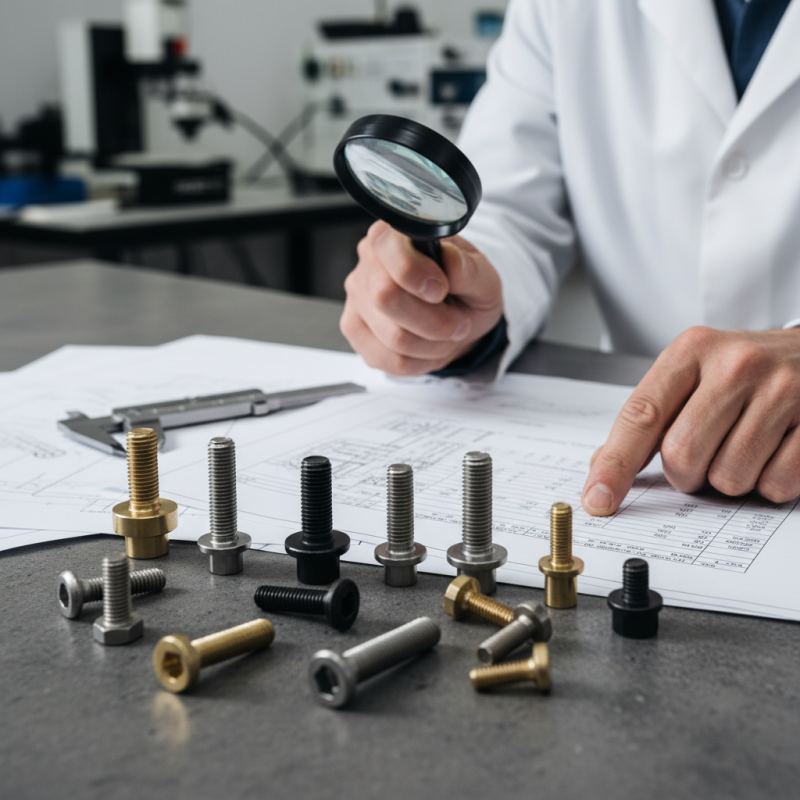
Shoulder screws are essential components in various applications. Understanding their types helps in making the right choice. The most common types include plain, flanged, and knurled shoulder screws. Each serves a unique purpose.
Plain shoulder screws are versatile and often used in machinery and fixtures. They provide a smooth surface for rotating components.
Flanged shoulder screws offer additional support and stability. They are ideal for applications needing a broader surface area, reducing stress on materials.
Knurled shoulder screws, with their textured surface, are used where easy manual adjustment is necessary.
When selecting shoulder screws, consider the specific application and load requirements. Reliable information can guide you, but trial-and-error may still occur. Some applications might require adjustments based on usage. Not all screws perform identically, even with similar specifications. Testing various options yields better results. Each type has its pros and cons, and assumptions can lead to mistakes.
Material Selection for Shoulder Screws: Steel vs. Stainless Steel
When choosing shoulder screws, material selection is crucial. Steel and stainless steel are the two main options. Steel is known for its strength. It's often used in high-impact applications. However, it is prone to rust and corrosion. Exposure to moisture can weaken steel over time.
On the other hand, stainless steel offers better corrosion resistance. It contains chromium, which forms a protective layer. This makes it suitable for environments where moisture is a concern. However, stainless steel can be less strong than standard steel. In specific applications, this may lead to issues. The weight of the application should be considered as well.
Ultimately, the choice between steel and stainless steel depends on the application's requirements. An environment with varying humidity levels may favor stainless steel. Yet, if high tensile strength is needed, steel might be the better option. Weighing the pros and cons is essential for an informed decision.
Material Comparison for Shoulder Screws: Steel vs. Stainless Steel
Understanding Dimensions and Tolerances in Shoulder Screws
When selecting shoulder screws, understanding dimensions and tolerances is crucial. The diameter of the shoulder directly affects the fit and functionality. It’s essential to measure accurately. Common diameters are often found in catalog specifications, but custom sizes might be necessary for unique applications.
Tolerances define the acceptable limits of variance in screw dimensions. They impact assembly and performance significantly. If tolerances are too loose, the screw may not fit securely. Conversely, tight tolerances can increase costs and hinder production speed. Identify which tolerances are vital for your project.
There’s always a margin for error in measurements. Overly rigid specifications might lead to issues during assembly. Flexibility in tolerances could lead to better adaptability in various applications. Consequently, revisiting and reassessing these factors is a wise approach. It ensures that the selected shoulder screws will meet the specific needs of your project efficiently.
Load Capacity and Strength Considerations for Shoulder Screws
When selecting shoulder screws, understanding load capacity and strength is crucial. These screws play a pivotal role in various mechanical applications, necessitating precise specifications. Load capacity refers to how much weight a shoulder screw can sustain without failing. This factor depends on the material used and the dimensions of the screw. For instance, a thicker shoulder can handle higher loads. It’s essential to match the screw to the specific demands of your project.
Strength considerations come into play when evaluating materials. Steel screws generally offer better strength than aluminum. However, aluminum screws are lighter and resistant to corrosion. The trade-off between weight and durability is an important consideration. Additionally, the installation process should not be overlooked. Over-tightening can reduce a screw's strength due to stress concentrations.
Assessing these factors requires careful attention. A mismatch in load capacity can lead to catastrophic failures. Sometimes, the packaging or documentation may not provide clear specifications. This lack of information can complicate decision-making. Designers should conduct tests to verify the actual performance of selected screws. In the end, understanding these elements can significantly impact the success of your projects.
Importance of Surface Finish and Coatings on Shoulder Screws
When selecting shoulder screws, the surface finish and coatings play a crucial role in overall performance. A high-quality finish enhances durability, reduces friction, and prevents corrosion. Experts indicate that a well-finished screw can increase lifespan by up to 50%. This is particularly important in demanding applications, where wear and tear can quickly lead to failure.
Various surface treatments, such as zinc plating or anodizing, provide different levels of protection. For instance, zinc plating can resist rust and oxidation effectively. On the other hand, anodized aluminum screws are lightweight but offer excellent resistance to corrosion. Consider the specific environment in which the screws will be used. Harsh chemicals or high humidity may require specialized coatings to ensure longevity.
**Tip:** Always verify the manufacturer's specifications regarding surface treatments. This helps in making informed decisions tailored to your application needs.
It's essential to understand that not all finishes are equal. A poorly finished screw may lead to imbalance and faulty assembly. Always inspect surfaces for uniformity and smoothness. This can save time and resources in the long run.
**Tip:** Consider testing the screws in your specific environment before full-scale deployment. This step can help gauge how well they perform under actual working conditions.
Top Factors to Consider When Buying Shoulder Screws
| Factor | Importance | Recommended Surface Finish | Common Coatings |
| Material Type | Ensures compatibility and performance in applications. | Anodized / Zinc Plated | Galvanized, Black Oxide |
| Diameter | Affects strength and load-bearing capacity. | Machined / Polished | None |
| Length | Crucial for assembly integrity and fitting. | Passivated | Zinc Rich Primer |
| Thread Type | Ensures proper engagement with mating parts. | N/A | Teflon Coated |
| Strength Rating | Indicates load capacity and safety factors. | N/A | Epoxy Coatings |
| Surface Finish | Affects corrosion resistance and aesthetics. | Smooth / Textured | Anodized, Powder Coated |


' d='M0 0h21v15H0z'/%3E%3Cpath fill='url(%23b)' d='M0 0h21v5H0z'/%3E%3Cpath fill='url(%23c)' d='M0 5h21v5H0z'/%3E%3Cpath fill='url(%23d)' d='M0 10h21v5H0z'/%3E%3C/g%3E%3C/svg%3E)